Nanbu Tetsubin
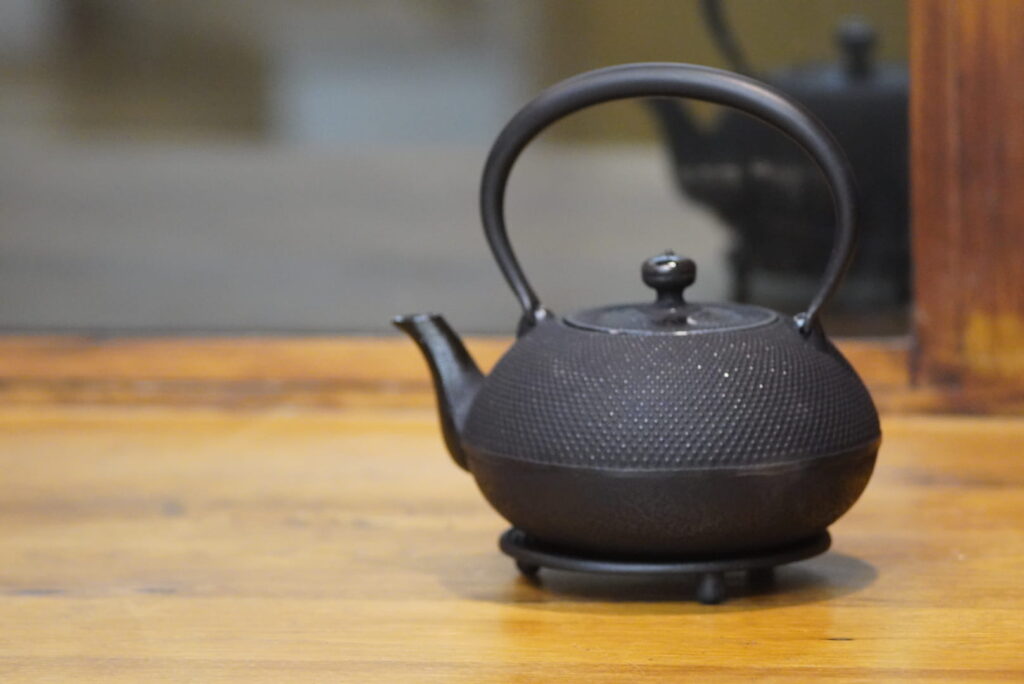
Nanbu Tetsubin is a traditional Japanese cast-iron kettle and one of the most well-known products of Nanbu ironware, a craft that originated in Iwate Prefecture in northern Japan.
Its history dates back to the 17th century, when iron kettles began to develop alongside the culture of the Japanese tea ceremony. Over the centuries, artisans refined their techniques, and the tetsubin became both a practical household tool and a symbol of Japanese craftsmanship deeply connected to everyday life.
One of the defining features of a Nanbu tetsubin is its excellent heat retention and durability, made possible by its thick cast-iron construction. The surface is often decorated with traditional patterns such as the small dotted arare texture, giving the kettle a distinctive aesthetic that combines functionality with beauty.
When water is boiled in a tetsubin, a small amount of iron is released into the water. Scientific studies have confirmed that this can contribute to dietary iron intake.
Many people also believe that water boiled in an iron kettle becomes smoother and rounder in taste, enhancing the flavor of tea and coffee.
Nanbu tetsubin are known for their longevity. With proper care, a single kettle can be used for decades and sometimes even a lifetime. For this reason, they are valued not only as tools for daily use but also as objects that embody the spirit of Japanese craftsmanship and aesthetics. Combining tradition, durability, and functional beauty, the Nanbu tetsubin remains a timeless symbol of Japan’s cultural heritage.