Why We Use the Conical Dripper by Coffee Syphon Co., Ltd.
Coffee Syphon Co., Ltd.
100 Years of History
and
the Pursuit of “Essence”
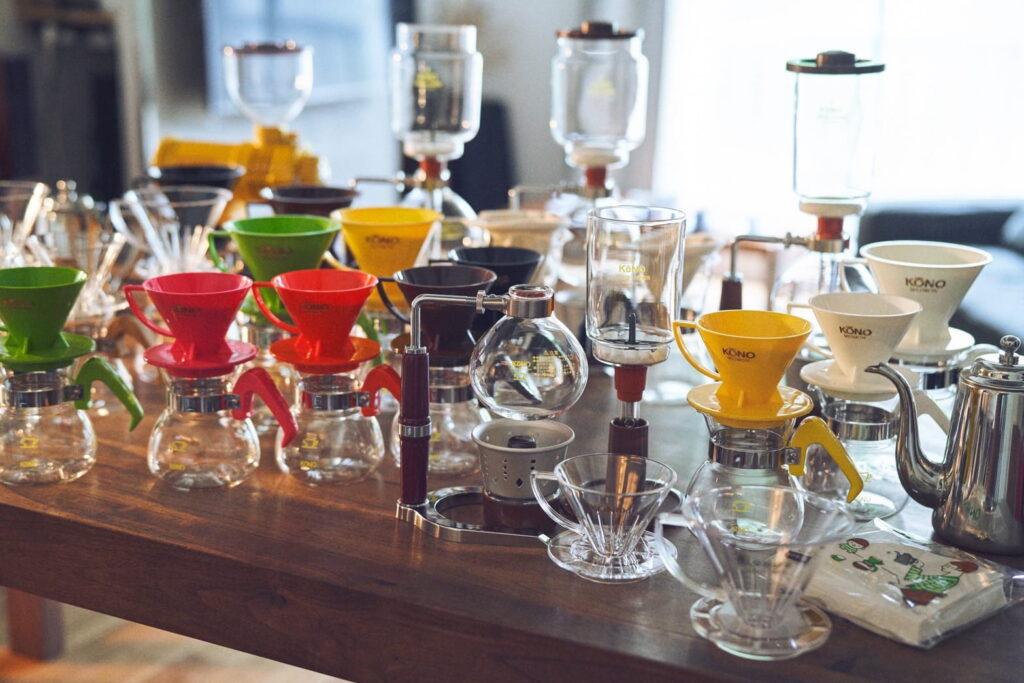
1. A Century of Heritage: The Birth of the Coffee Syphon
In 2025, Coffee Syphon Co., Ltd. celebrated its 100th anniversary. The company’s history began when the founder, Akira Kono, designed Japan’s first glass coffee brewing apparatus and named it the “Coffee Syphon.” This name, now recognized globally, is the starting point born from the company’s tireless pursuit of the perfect cup.
2. Post-War Recovery and Contribution to Japanese Coffee Culture
Since its founding in 1925, the company has navigated tumultuous times. After the hardships of World War II, they resumed product development in 1947. As life in Japan flourished during the post-war recovery, their brewing tools evolved alongside the culture. The current president grew up watching craftsmen work with sincere dedication in the family factory, feeling the “warmth” of the workshop as Japanese coffee culture matured.
3. Pride in Craftsmanship and the Innovation of the “Conical Dripper” The World’s First Conical Dripper is Born
The journey of Coffee Syphon Co., Ltd. has always been a confrontation with the “essence” of coffee. When the patent for the syphon expired, many manufacturers entered the market, but only two glass manufacturers—including this company—stayed true to the original principles of the material and extraction. Drawing on decades of experience and wisdom, the company developed the world’s first conical paper filter dripper (the “Meimon” series) in 1973. The motivation behind its development was a sincere desire to make the rich, deep flavor of “Nel Drip” (cloth filtration)—then considered the pinnacle of brewing—simple and reproducible for everyone.
“Coffee is always a sign of friendship and a celestial gift of grace that can be enjoyed alone by the fireside. To enable anyone to easily create that exquisite taste is my earnest desire, and the very reason why I present this invention to the world.”
This noble passion of the creator brought the conical structure—considered difficult to design at the time—into reality. In 2003, its functional beauty won the Gold Prize in the “Zakka Catalog,” triggering the spread of hand-drip brewing from professionals to households and profoundly shaping Japanese coffee culture.
While many similar products exist today, the company never wavers in its pursuit of “authentic flavor,” distinguishing itself from mere imitations. This sincere craftsmanship, backed by 100 years of history, remains the pride of KONO, attracting enthusiasts worldwide.
Just as the people of Georgia have protected the “life” of wine within the Qvevri, we have translated the “life” of coffee through these glass tools.
The Collaboration
with
Coffee Researcher
Makoto Inoue
When the world’s first conical dripper was created, it was co-developed with the renowned Japanese coffee
researcher, Makoto Inoue. Below is a passage from his writings at the time:
The coffee drip pot was established in 1800 with the invention of De Belloy in France. This was a milestone that began the development of modern Western-style coffee, influencing world-famous styles from Vienna to New Orleans.
However, observing that there were certain difficulties and inherent flaws despite their distinct character, I spent many years investigating improvements based on the principles of drip brewing.
Having finally reached a successful design, we are now ready to manufacture and release this as a new product through Coffee Syphon Co., Ltd., with whom I have had a close relationship for years.
This product brings the ‘true drip’—previously only possible with cloth bags—almost perfectly into a glass apparatus. Whether for home or professional use, anyone can easily perform extraction and filtration within the necessary time.
Coffee is always a sign of friendship and a celestial gift of grace that can be enjoyed alone by the fireside. To enable anyone to easily create that exquisite taste is my earnest desire, and the very reason why I present this invention to the world.
I would be more than happy if this tool becomes a staple for coffee lovers everywhere. As a creator who has dedicated his life to coffee, nothing could bring me greater joy.
The KONO conical dripper is a world-class apparatus that has supported and built Japanese coffee culture.
Behind its creation lies the intellect, effort, and above all, the passion of many people to “make coffee delicious.”
Therefore, at Kissa Ayanoma, we use the KONO dripper with the hope of spreading this passion within Georgia, ensuring that coffee here can be made as delicious as possible.
The Science of
the KONO Conical Dripper
Why It Creates
the “Authentic” Taste
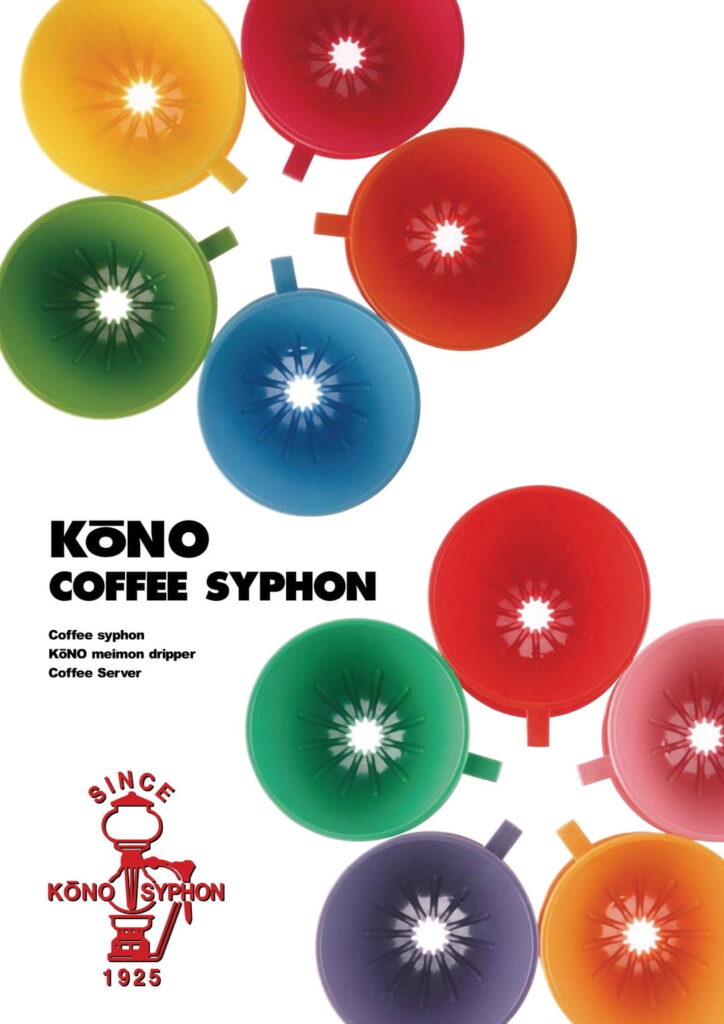
The KONO dripper is designed to reproduce the flavor of “Nel Drip” (cloth) in a simpler way. The secret lies in its conical shape and internal structure.
1. The Power of “Single-Point Concentration”
Reproducing Nel Drip: The conical form mimics the movement of a cloth filter, where the fabric expands and the extract gathers at a single point to drip down.
Thick Coffee Layer: Compared to fan-shaped (trapezoid) drippers, the coffee grounds form a deeper vertical layer. As water travels a longer distance through the grounds, it thoroughly absorbs the coffee’s essence.
2. Feature 1: The Calculated Length of the “Ribs” (Grooves)
The grooves inside the dripper do not reach the top; they stop halfway. There is a clear physical reason for this:
Blocking the “Scum” (Bitterness): The paper filter adheres closely to the upper part of the dripper, preventing the extract from leaking out of the top. This ensures that the “scum” (foam containing harshness and bitterness) floating during brewing does not enter the cup, protecting the clarity of the flavor.
Balancing Infusion and Filtration: By having ribs only at the bottom, the dripper achieves an ideal balance—allowing smooth filtration at the base while allowing the water to dwell slightly longer in the upper section for extraction.
3. Feature 2: The Precision-Engineered Single Small Hole
The hole at the bottom is designed to be slightly smaller:
Controlling Contact Time: This prevents water from passing through too quickly, ensuring a “slow and steady” contact time between the water and the coffee grounds.
Rich Body: Because it does not drain too fast, it is possible to extract the original richness and bold body of the coffee.
In Closing
This structural characteristic is the “form” derived from the ancestors’ wish to “make coffee delicious.”
“We do not simply brew coffee with this tool. Using the wisdom accumulated over 100 years, we extract only the purest part of the coffee—the ‘celestial gift of grace’—while removing any unnecessary impurities.”